
Understanding the Difference: Literacy vs. Education
In everyday conversation, the words literacy and education are often used interchangeably. However, technically, they are not the same.
Literacy refers to the ability to read and write. A person who can read and write basic text is considered literate.
Education, on the other hand, goes much deeper. It includes:
-
Knowledge
-
Skills
-
Personality development
-
Critical thinking
-
Moral values
-
Wisdom
-
The ability to solve problems
-
The ability to live responsibly in society
Developed nations do not measure success merely by literacy rates. They measure how civilized, skilled, morally responsible, and socially aware their citizens are.
An educated person is not just someone who holds a degree — but someone who contributes positively to society.
Pakistan’s Literacy Reality
According to various reports, Pakistan’s literacy rate fluctuates between 59.3% and 62.6%. However, these numbers hide serious disparities:
-
Urban literacy rates are significantly higher than rural areas.
-
Male literacy rates are higher than female literacy rates.
-
Tribal and underdeveloped regions have extremely low literacy rates.
-
Enrollment ratios show major gender imbalance.
In some developed regions, literacy can reach above 90%, while in tribal areas it may drop drastically. This uneven distribution shows that a single policy cannot fix the entire system. Segmented strategies are required.
Furthermore:
-
Over 60 million children are deprived of primary education.
-
Around 20 million children do not reach middle-level education.
-
Pakistan ranks poorly in global education indices.
This is not just an education crisis — it is a national development crisis.
State Responsibility and Budget Allocation
One of the core issues is budget allocation.
Pakistan spends less than 2% of its GDP on education, which is significantly lower compared to many developing countries that spend 4–6%.
Education is a long-term investment. However, political systems often prefer short-term visible projects that bring immediate popularity rather than investing in long-term human capital development.
Even more concerning:
-
Reports suggest inefficiencies and misuse of education funds.
-
Higher education budgets have faced cuts.
-
Universities struggle due to limited research funding.
-
A lack of qualified PhD faculty impacts global rankings.
When education and health are neglected, national foundations weaken.
As economist Alfred Marshall stated:
“The best capital is that which is invested in human beings.”
Education and Economic Development
Education directly impacts economic growth in multiple ways:
-
Skilled workforce increases productivity.
-
Better education reduces poverty.
-
Employment opportunities expand.
-
Social unrest decreases.
-
Innovation and research improve.
When people are educated, they become economically productive citizens. They create businesses, innovate solutions, and contribute to national GDP.
Without education, poverty cycles continue across generations.
Character Building: The Forgotten Goal
Education is not only about economic growth.
It is also about character.
Aristotle said:
“Educating the mind without educating the heart is no education at all.”
In Islamic tradition, the first revelation to Prophet Muhammad (Peace Be Upon Him) was:
“Iqra” — Read.
This was not merely about reading text — it was about awareness, knowledge, and intellectual awakening.
True education develops:
-
Honesty
-
Civic sense
-
Moral discipline
-
Social responsibility
If education produces engineers and doctors without ethics, society still suffers.
Three Parallel Education Systems — A Divided Society
Pakistan currently operates with:
-
Madrassa system
-
Urdu-medium system
-
English-medium system
This has resulted in three different social classes emerging from three different educational tracks.
Instead of integration, education has unintentionally created division.
The purpose of education should be social harmony and national unity — not fragmentation.
Access and Equality: A Major Barrier
A healthy society is one where every individual can develop their talent and potential.
However, when access to quality education is unequal:
-
Rural students compete unfairly with urban elite students.
-
Students from underprivileged backgrounds lack exposure.
-
Talent remains undiscovered.
Equal opportunity is essential for national progress.
The Role of Social Media: Decline or Opportunity?
Social media was originally created for knowledge sharing and communication. Platforms like Facebook began as university networks for sharing notes and academic content.
However, today:
-
Youth spend more time on entertainment than education.
-
There is little content filtering.
-
Children are exposed to age-inappropriate information.
-
Attention spans are shrinking.
Social media itself is not the problem.
The real issue is:
-
Lack of digital literacy
-
Lack of character education
-
Lack of parental and institutional guidance
If youth are properly educated, they can use social media as a powerful learning tool instead of a distraction.
Policy Failure or Lack of Vision?
The critical question is:
Has the state truly recognized the importance of education?
Education requires:
-
Long-term policy consistency
-
Transparent funding
-
Teacher training
-
Curriculum reform
-
Moral and civic development
Without a clear vision, education becomes a mechanical system of degrees — not a transformative force.
What Is the Goal of Education?
Before reforming the system, we must answer:
-
Do we want degree holders or responsible citizens?
-
Do we want literacy statistics or national transformation?
-
Do we want social integration or social division?
Clarity of purpose defines the direction of reform.
The Role of Skoolyst
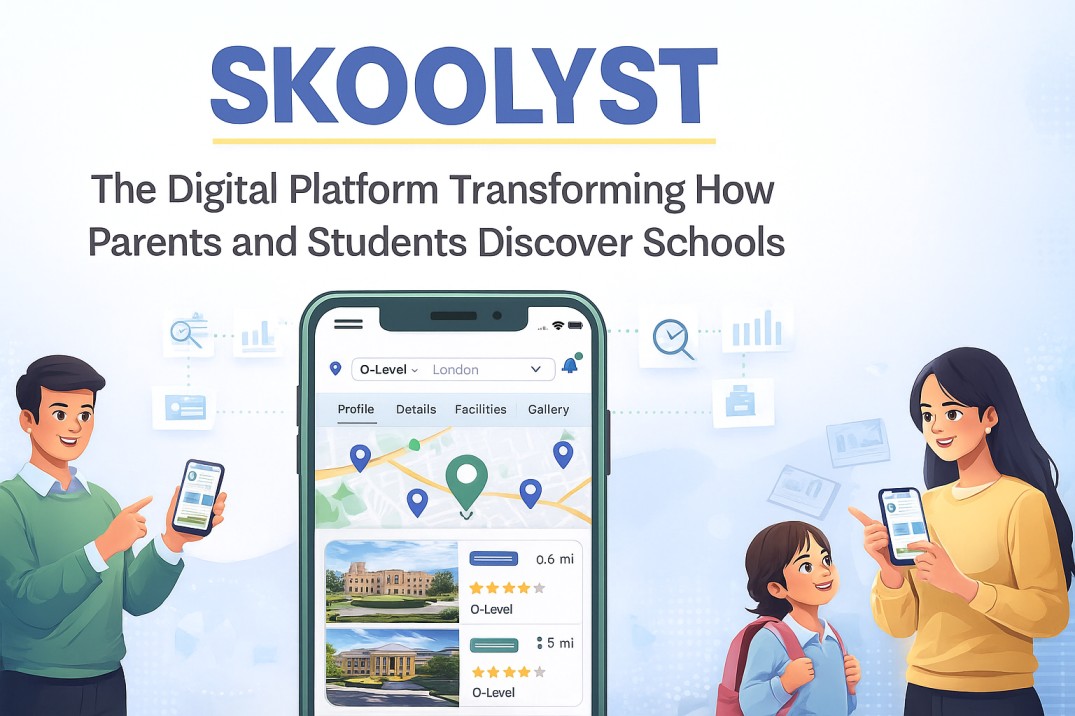
Skoolyst emerges as a digital initiative aimed at addressing some of these structural gaps.
Skoolyst’s mission includes:
-
Helping parents make informed decisions.
-
Providing transparency in school information.
-
Encouraging quality education standards.
-
Creating awareness about better educational options.
-
Supporting improvement through comparison and visibility.
While Skoolyst cannot reform national policy alone, it can empower families — and empowered families create empowered societies.
Change often begins with informed choices.
Conclusion: Education Is Survival, Not a Luxury
Education is not a secondary issue.
It is the foundation of economic stability, social harmony, and moral development.
If education remains neglected:
-
Economic progress slows.
-
Social divisions widen.
-
Youth lose direction.
-
National strength weakens.
But if education becomes a true priority:
-
Poverty reduces.
-
Innovation increases.
-
Character strengthens.
-
The nation progresses.
Education is not just about schools.
It is about the future of Pakistan.
Please comment for this artical and share your thoughts



Comments (0)
Join the Conversation
Please log in to leave a comment and share your thoughts.
No comments yet
Be the first to share your thoughts!